

Construction sites are busy, high-risk environments where clear communication can help prevent incidents, improve site management, and support compliance obligations. That’s why construction site signage across Australia plays an important role in keeping workers, visitors, and the public informed about potential hazards and site requirements.
From warning signs and PPE notices through to emergency information and project branding, effective signage helps businesses meet workplace safety obligations while maintaining a professional site presence.
In this guide, we will explain common site signage requirements, Australian compliance considerations, and practical tips for selecting signage that performs in real-world conditions.
Why Is Construction Site Signage Important
Construction signage plays a critical role in maintaining safe, organised, and compliant worksites. Beyond identifying hazards, signage helps communicate site rules, guide vehicle and pedestrian movement, reinforce safety procedures, and provide important information to workers, contractors, and visitors.
Key functions of construction signage include:
- Communicating hazards and restricted areas
- Directing vehicle and pedestrian traffic
- Reinforcing site safety requirements
- Supporting workplace compliance obligations
- Promoting project branding and visibility
For many projects, signage is one of the first things people see. It contributes to both safety outcomes and public perception of the project.
What Signage Is Required on Construction Sites
The exact signage requirements vary depending on the project, location, risks, and state-based regulations. However, most construction sites require a combination of safety, information, and warning signage.
Safety and PPE Signage
Personal protective equipment (PPE) signage is often the first safety information workers encounter when entering a construction site. These signs clearly communicate the protective equipment required before accessing operational areas, helping businesses meet workplace safety obligations and reduce the risk of incidents.
Examples include:
- Hard hat required
- Safety footwear required
- High-visibility clothing required
- Eye and hearing protection notices
Warning and Danger Signs
Warning and danger signs are used to draw attention to hazards that may not be immediately visible. They play an important role in preventing unauthorised access and helping workers identify risks before entering potentially dangerous areas.
Depending on the project, warning signage may be used to highlight:
- Construction work in progress
- Falling object hazards
- Excavation areas
- Electrical hazards
- Restricted access zones
Emergency Information Signs
During an emergency, access to clear and visible information can make a significant difference. Emergency signage helps workers, contractors, and visitors quickly locate important resources and follow established response procedures.
Clear emergency information can help improve response times during incidents.
Typical emergency information signage may identify:
- Emergency assembly points
- First aid station locations
- Emergency contact details
- Fire equipment locations
- Site evacuation procedures
Directional and Information Signs
Large construction projects often require directional signage to improve site navigation. These signs help reduce confusion and improve overall site efficiency.
Examples include:
- Site office locations
- Visitor parking
- Delivery zones
- Pedestrian routes
- Entry and exit points
Understanding Australian Construction Signage Regulations
Construction businesses must consider both national workplace safety obligations and site-specific requirements.
Safe Work Australia provides guidance around workplace health and safety obligations, while individual states and territories administer their own WHS legislation. Australian construction signage regulations generally focus on ensuring safety information is:
- Clearly visible
- Easy to understand
- Positioned appropriately
- Maintained in good condition
- Relevant to site risks
Businesses should regularly review workplace safety signage requirements as projects evolve and site conditions change. For official guidance, you can refer to the below links:
- https://www.safeworkaustralia.gov.au
- https://www.worksafe.vic.gov.au
- https://www.safework.nsw.gov.au
Where Should Construction Site Signage Be Placed?
Even high-quality signage can become ineffective if positioned incorrectly. Mandatory signage should be placed where it is most likely to be seen before exposure to a hazard.
Common placement areas include:
- Site entry points
- Access gates
- Temporary fencing
- High-risk work zones
- Equipment storage areas
- Traffic management areas
- Site offices and amenities
Regular inspections help ensure signage remains visible and unobstructed throughout the project lifecycle.
Temporary vs Permanent Construction Signage
Construction projects vary significantly in scale, duration, and compliance requirements, which means signage needs can differ from one site to another. Choosing the right signage solution depends on factors such as project length, environmental conditions, site activity, and long-term operational requirements.
Temporary Construction Site Signage
Temporary signage is commonly used for:
- Short-term projects
- Roadworks
- Site access changes
- Temporary hazards
- Event infrastructure projects
Materials such as corflute and temporary vinyl solutions are often used because they are lightweight and cost-effective.
Permanent Construction Signage
Permanent signage is typically selected for:
- Long-term developments
- Infrastructure projects
- Industrial facilities
- Ongoing operational sites
More durable materials such as aluminium composite panels (ACM), metal signage, and high-performance vinyl systems are commonly used in these environments.
What Makes Effective Construction Signage
Good signage needs to perform in challenging conditions. Exposure to weather, dust, heavy equipment, and changing site conditions means signs must be designed for both compliance and practical use.
Key considerations include:
Visibility
Signs should remain readable from an appropriate distance and under varying light conditions.
Durability
Construction sites expose signage to weather, dust, machinery, and heavy traffic. Durable materials help extend service life and reduce replacement costs.
Compliance
Signage should align with recognised safety standards and site-specific requirements.
Consistency
Using a consistent signage system across projects helps improve recognition and communication.
Custom Signage Solutions for Construction Projects
Depending on the scope of the development, signage may also need to support wayfinding, stakeholder communication, project promotion, and brand visibility.
By combining compliance messaging with professionally designed visual elements, businesses can create a safer, more organised site while presenting a consistent and professional image to workers, visitors, investors, and the broader community.
Custom signage solutions are commonly used for:
- Project branding
- Development marketing
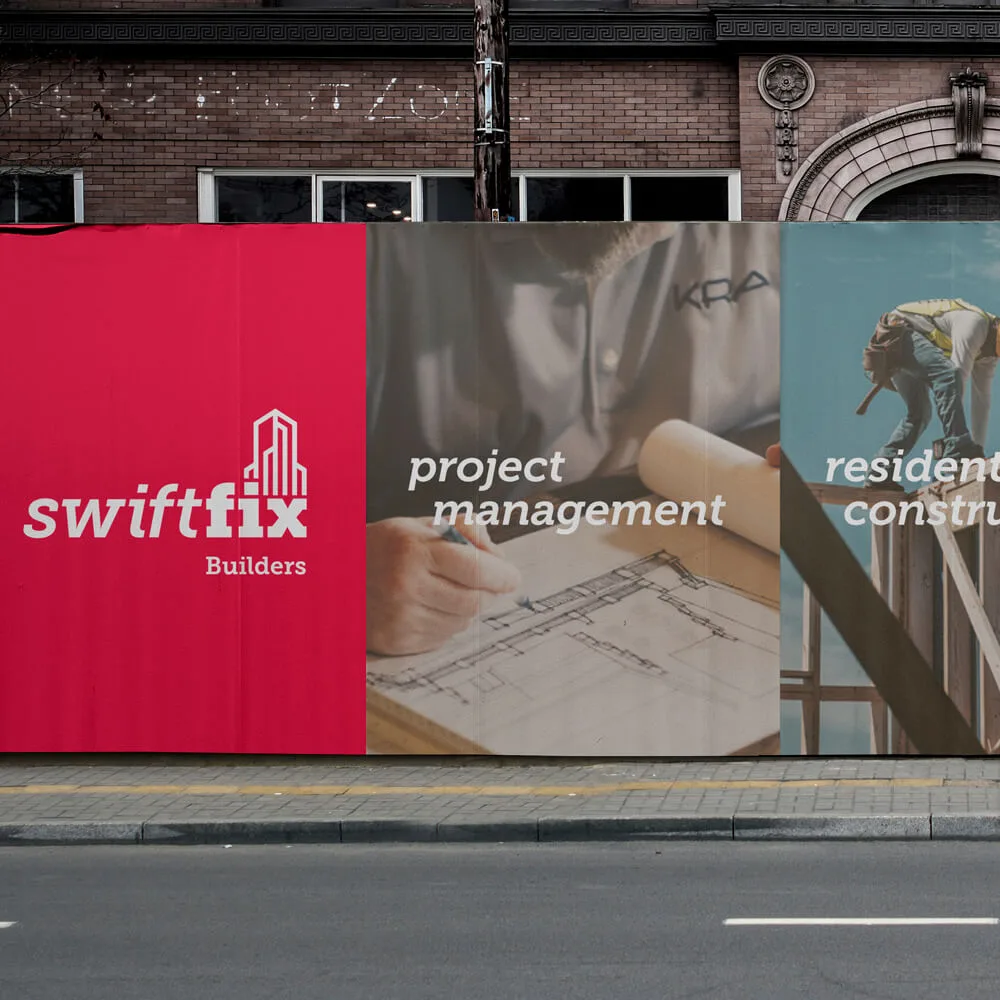
- Site hoardings
- Directional systems
- Stakeholder communications
- Multi-site construction programs
Businesses managing large-scale developments often combine safety signage with broader signage and display solutions to create a professional and consistent site presence. For projects requiring oversized graphics, development marketing boards, or branded site barriers, large format printing services can help ensure messaging remains highly visible across busy construction environments.
Many organisations also use printed site hoardings to promote developments, communicate project information, and enhance site presentation while construction is underway.
What Are the Risks of Non-Compliance
Construction signage plays an important role in communicating hazards, site rules, and safety procedures. When signage is missing, damaged, outdated, or difficult to see, the likelihood of misunderstandings and safety incidents can increase significantly.
Inadequate or non-compliant signage may lead to:
- An increased risk of workplace incidents
- Confusion around site procedures and access requirements
- Delays caused by navigation or site management issues
- Regulatory action or compliance breaches
- Reputational damage for contractors and project stakeholders
While signage is only one component of an effective safety management system, it remains a critical tool for communicating information clearly and helping construction sites meet their workplace health and safety obligations.
Frequently Asked Questions
What signage is mandatory on construction sites in Australia?
Requirements vary by project, but most sites require safety signage, PPE notices, warning signs, emergency information, and site identification signage.
What are WHS signage requirements?
WHS signage should clearly communicate hazards, safety procedures, and emergency information in locations where workers and visitors can easily see them.
Where should safety signs be placed on construction sites?
Signs should be installed at entry points, near hazards, around restricted areas, and anywhere workers need safety information before undertaking a task.
What materials are best for outdoor construction signage?
Common options include ACM panels, vinyl graphics, corflute, mesh banners, and other weather-resistant materials designed for outdoor use.
Can construction signage be customised?
Yes. Many projects require customised signage that combines safety information, project branding, wayfinding, and stakeholder communication.
How often should construction signage be reviewed?
Signage should be reviewed whenever site conditions change and as part of routine safety inspections throughout the project.
Construction Signage That Supports Safety and Professional Site Presentation
Effective construction site signage helps businesses communicate clearly, support compliance obligations, and create safer work environments.
Whether you’re managing a small commercial build or a large infrastructure project, selecting durable, fit-for-purpose signage can improve site communication and help projects run more smoothly.
Kwik Kopy provides end-to-end signage solutions, from concept and design through to production and delivery, helping businesses create professional, compliant, and highly visible construction signage across Australia.